
WATER INFILTRATION ISSUES

For building owners and managers who want to quickly identify the source of a water infiltration or a mold issue occurring through various building components
- Roof
- Wall
- Windows and curtain walls
- Parking structure


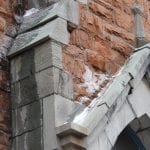
A thorough expertise on the causes of water infiltration is essential to locate the source of the water leakage, associated damages, and to put a definitive end to it.
The professional involved in the expertise must be sufficiently equipped to perform water tests and intrusive exploratory openings in any type of building envelope assembling, such as brick/stone/metal sidings, curtain walls, roofs, etc.
It is important to perform a complete visual inspection prior to launch any intrusive exploratory openings and water tests. This is why the choice of an experimented firm is significant. Our expertise lays on thousands of similar thorough expertises on any type of building.
We suggest to perform the followings steps :
- Collect technical data (date of construction, recurrent issues/damages observed, available documentation) from the building owner/manager
- Identify apparent damages to the components (often related to poor through-wall flashing, faulty water drainage design, inadequate maintenance repair over years, etc.)
- Perform a complete or a partial (in the problematic area) building inspection
- Identify, quantify and evaluate the condition of all the building envelope components, such as:
- Siding :
- Masonry/concrete/stone/wood/metal, etc.
- Curtain wall and windows, openings
Roof and equipments
- Perform water tests in order to try to reproduce the water infiltration
- Perform any exploratory openings or additional analysis to validate observations, such as :
- Exploratory cuts
- Thermography
- Additional water tests
- Lab analysis
- Excavation
- Input from our engineers or architects partners
- Produce a complete technical report summarizing collected observations/data during building inspection, including the following
- Description of the premises
- Observations and photos
- Any relevant sketch for a better comprehension
- Any relevant detailed 11” x 17” plan of the area studied (roof plan, facade plan, elevation, etc.)
- Analysis, discussion
- Life expectancy of components
- Complete technical recommendation for short to long term solutions
- Budgetary evaluation of the recommended work